
Breathe Clean and Fresh Air in Your Facility
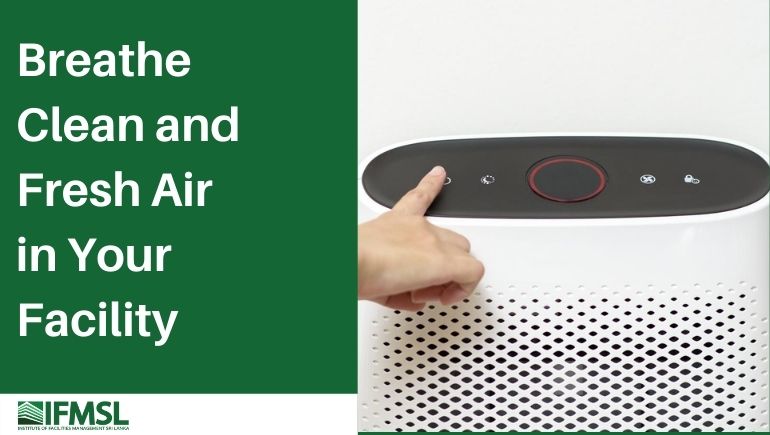
New demand was placed on an air filtration system as a precautionary measure against the pandemic situation to provide clean conditioned air.
The quality of indoor air has a considerable impact on the health and comfort of people who spend most of their time indoors. Good indoor air quality in the facility depends to a great extent on the effectiveness of the HVAC air filtration system and they involve to meet the needs of building occupants. The only target of these systems was dust and dirt and new demand was placed on air filtration systems as a precautionary measure against the pandemic situations to provide clean conditioned air. To meet this need, manufactures have made changes to the existing filtration system by adding new technologies to increase the performance of the system and to reduce different types of contaminants such as particulate, gaseous and biological which are including dust, dirt, smoke and mists.
The most commonly used filter system in buildings is the mechanical air filters consist of spun glass, non-woven material that operates through the process of straining and impaction of particles with the filter material and the speed at which particles are removed from the air passing through the filter is the efficiency of the filter. Gas-phase systems can effectively remove chemical vapours, volatile organic compounds, ozone and almost any vapour. They may be installed in facilities where the HAVC fresh air intake is located near a source of pollution, such as a loading dock and they are installed with the HAVC system’s duct. UV light systems are killing or deactivating many biological contaminants and are used in HAVC systems to limit biological growth on coils. Now, these systems are adapted to kill bacteria and fungi and to inactivate viruses in the airflow of the HVAC system. The concentration of pollutants in the air varies with the space of most buildings and with the work done in those spaces. A large amount of air dust can be produced in some areas and others may contain highly VOCs. Portable air cleaners can help to prevent both conditions since they independently operate when the central system is shut down. Another system that operates independently of the buildings’ central HAVC system is the upper room disinfection system. These systems use specially designed lighting fixtures with UV-C lamps installed upper level in the rooms rather than the HAVC system ductwork and the efficiency of the system can be further enhanced by the use of ceiling fans to improve air circulation.
However, managers can select or integrate systems that offer the greatest benefits for their operations by improving the way building systems meet occupant needs and preferences by providing greater control, decreasing unwanted temperature variations, and improving indoor air quality.